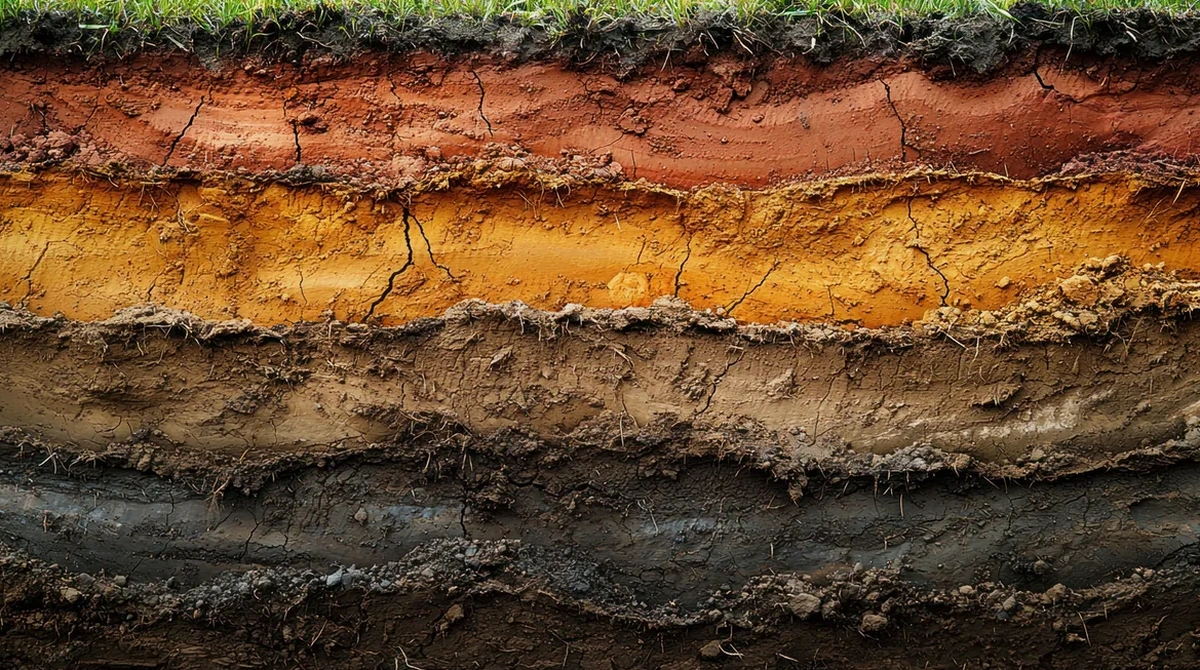
Building on the hills around Coffs Harbour is a different game from developing the flat alluvial flats near the coast. The Harbour Drive corridor sits on deep residual soils, while estates carved into the slopes at Toormina and Sapphire Beach often rest on engineered fill. That fill varies widely—some is well-compacted sandstone rubble, other sites have clay-rich material placed decades ago without proper control. Before designing any foundation on fill in Coffs Harbour, a targeted investigation is essential. The team checks fill thickness, compaction level, and potential for collapse upon wetting. Work often begins with a calicatas exploratorias to log fill stratigraphy directly, then advances to in-situ density testing. This approach prevents costly surprises when the structure loads the ground.
Fill placed without proper compaction control can settle more than 50 mm under a two-storey building load.
Method and coverage
A common mistake among local builders is assuming all fill behaves like natural ground once it looks compact. That assumption fails when the fill contains organic pockets or variable moisture content. For foundations on fill in Coffs Harbour, the analysis must include settlement magnitude and rate—especially differential settlement between fill zones and cut areas. The laboratory phase tests compaction curves, Atterberg limits, and collapse potential under load. Field work typically involves placa de carga tests to measure actual modulus of subgrade reaction. Results feed into a bearing capacity check under AS 4678-2006. The final report provides allowable bearing pressure, expected settlement, and recommendations for Improvement if needed. Every step aims to match the foundation type to the real condition of the fill.
Technical reference image — Coffs Harbour
Regional considerations
Coffs Harbour receives over 1,600 mm of rainfall annually, with intense storms common between January and March. That water infiltrates fill that lacks proper drainage or capping. The result: differential settlement, foundation cracks, and in extreme cases, slope instability. A site at Korora saw fill 6 m deep settle 80 mm unevenly after two wet seasons, requiring underpinning. The risk escalates when fill sits on steep natural grades typical of the Coffs Harbour escarpment. A proper foundations on fill analysis identifies these hazards early. The investigation includes infiltration testing, long-term settlement modelling, and recommendations for drainage layers beneath the slab.
Detailed logging of fill type, depth, and moisture condition. In-situ density tests, Proctor compaction curves, and collapse potential measurements. Results guide compaction specifications for new fill and verify existing fill quality.
02
Settlement analysis and foundation design recommendations
One-dimensional consolidation modelling for total and differential settlement under design loads. Interpretation of plate load test data to derive modulus values. Final report with allowable bearing pressure, expected settlement magnitude, and Improvement options.
Standards that apply
AS 4678-2006: Earth-retaining structures (fill-related sections), AS 1726-2017: Geotechnical site investigations, AS 1289 series: Methods of testing soils for engineering purposes
Top questions
How deep does fill need to be before it requires a formal analysis?
Any fill exceeding 1 m in depth beneath a structural foundation should be analysed. In Coffs Harbour, fill depths of 2–6 m are common in hillside subdivisions. The analysis becomes mandatory when fill supports footings or slabs under AS 4678-2006.
Can foundations on fill be designed without Improvement?
Sometimes yes, but only if the fill is well-compacted granular material less than 3 m deep and settlement predictions stay within tolerance. Most cases need at least light improvement—like dynamic compaction or a reinforced slab—to control differential movement.
What is the typical cost range for a foundations on fill analysis in Coffs Harbour?
The cost usually falls between AU$1.480 and AU$3.550, depending on fill depth, number of test pits, and laboratory testing volume. This covers field investigation, lab work, and a detailed settlement report.